

What does “feeling safe” actually mean to a dog?
It’s probably not what most of us imagine.
Safety is not created by good intentions, training tools, or strict rules. It is created by how a dog’s nervous system experiences the world — moment by moment, through their body, senses, relationships, and their ability to make choices.
When we begin to understand safety from the dog’s perspective, it can fundamentally change how we live with, care for, and support them.
Safety Is a Felt State, Not a Technique
At the most basic level, safety begins with a dog’s core needs being met: adequate food and water, rest and sleep, physical comfort, freedom from pain, hygiene, social connection, and the ability to move and eliminate comfortably.
These needs form the biological foundation of emotional well-being. From there, we may offer guidance, boundaries, and care — but only the dog can tell us whether they truly feel safe.
Some dogs appear naturally resilient. Others need significant support due to genetics, temperament, early development, injury, illness, trauma, or cumulative stress — including stressors that may be subtle or long-standing.
Safety is therefore deeply individual. It is not a method, a checklist, or a training protocol.
It is an internal, lived experience.
Why Safety Comes Before Learning
When dogs feel safe, they can explore, communicate, rest, play, and learn. When they do not, their behaviour narrows toward protection and survival.
From gestation through adulthood, emotional safety shapes neurological development, stress regulation, and behavioural flexibility. Research shows that chronic stress alters brain systems involved in learning, memory, digestion, immunity, and emotional regulation.
Learning is significantly impaired when a dog feels unsafe. Supporting a sense of safety allows the brain to engage in learning.
Our role is not to control behaviour, but to observe carefully, listen attentively, and respond without force.
Safety Lives in the Nervous System
Dogs, like all mammals, process safety and threat through the nervous system before conscious awareness.
The amygdala rapidly evaluates potential threat before conscious processing occurs, triggering physiological responses that prepare the body to act.
This is why dogs may react to people, places, sounds, or situations without an obvious cause. These responses are not deliberate choices. They arise from automatic biological processes shaped by both genetics and past experience.
What Affective Neuroscience Tells Us
Affective neuroscience shows that mammals share innate emotional systems present from birth.
Jaak Panksepp identified core emotional networks such as SEEKING, FEAR, PANIC/GRIEF, CARE, PLAY, and RAGE, which shape how animals experience the world.
When safety is uncertain, protective systems like FEAR or PANIC dominate. This can lead to behaviours associated with avoidance, shutdown, hyper-vigilance, or defence.
When safety is present, systems such as SEEKING and PLAY are more likely to emerge, supporting curiosity, exploration, connection, and learning.
Safety is therefore not created through obedience or compliance, but through how the brain and body perceive the environment.
Dogs Experience Safety Through Their Senses
Dogs do not experience the world as we do. Their sense of safety is shaped primarily through sensory information.
Smell
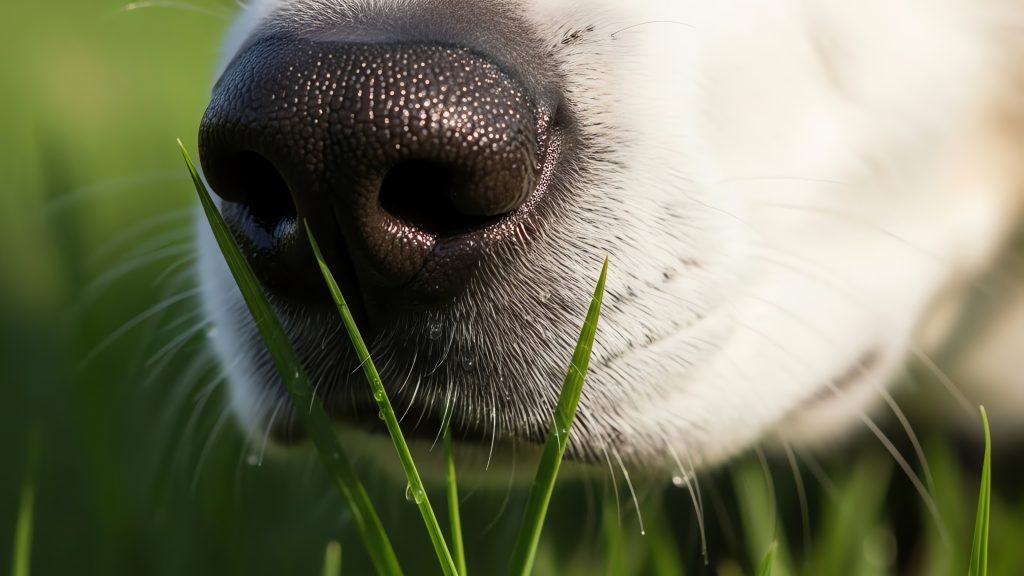
Smell is a dog’s primary way of understanding the world. Dogs detect not only who was present, but when — and even emotional states through stress-related odours.

Sound
Sudden or unpredictable sounds can activate the stress response before cognitive processing occurs. Chronic noise exposure has been associated with anxiety-related behaviours in dogs.

Movement
Fast, looming, or erratic movement can trigger reflexive threat responses. Calm, predictable movement helps support nervous system regulation.
Touch
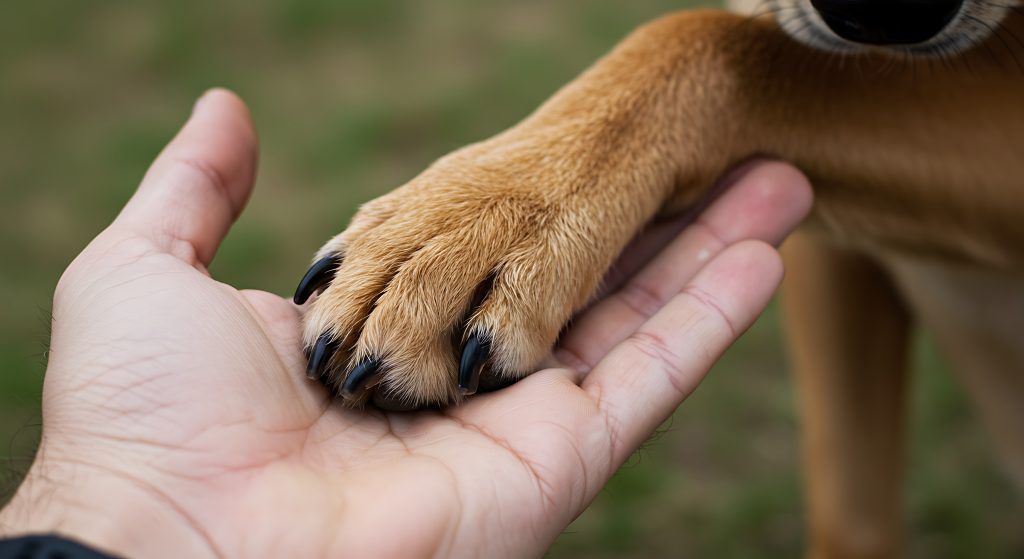
Touch can be soothing or threatening depending on context, consent, history, and physical comfort.

Taste and Digestion
Stress suppresses digestion through activation of the stress response system, which is why anxiety and gastrointestinal issues are often linked.

Safety Is Felt Through the Body
Comfort does not begin in the mind — it begins in the body.
A Practical Example: Slippery Floors
Slippery floors can significantly affect how safe a dog feels in their own home. When traction is poor, muscles tense, posture changes, and movement becomes cautious.
Over time, repeated slipping may contribute to joint strain, altered gait, pain, and loss of confidence.
Pain and discomfort are closely linked to changes in behaviour. Dogs experiencing chronic pain may appear anxious, irritable, withdrawn, or reactive — behaviours often misinterpreted as “training problems.”
Providing secure footing through rugs, runners, or non-slip surfaces is therefore a meaningful intervention that supports both physical and emotional safety.
Safety Grows Through Relationship and Attachment
Safety is not only sensory and physical — it is relational.
Attachment theory demonstrates that secure attachment develops when caregivers are consistent, responsive, emotionally available, and predictable.
Dogs show attachment patterns toward their caregivers similar to those observed in children. When care is steady and sensitive, dogs flourish.
When interactions are inconsistent, controlling, intrusive, or unpredictable, dogs may become anxious, clingy, withdrawn, or defensive — not because they are difficult, but because safety feels uncertain.
Choice, Agency, and the Freedom to Say No
Dogs have very little control over their lives. Humans decide when they eat, sleep, move, socialise, and even when they are allowed to toilet.
Research consistently shows that choice and control are essential components of welfare.
Punishment removes agency and suppresses communication. Compliance does not equal safety. A quiet dog may be a shut-down dog.
Positive reinforcement supports agency by allowing dogs to influence outcomes, strengthening trust rather than eroding it.
The Power of Slowing Down
Modern life is fast and overstimulating. Dogs live within our pace.
Without intentional pauses, dogs may remain in a state of constant low-level vigilance with little opportunity for true rest.
Stillness, silence, and unhurried presence allow the nervous system to settle. These are not techniques — they are relational states where regulation can occur.
Safety Is Lifelong
Socialisation and emotional development do not end in puppyhood. Safety continues to be shaped throughout a dog’s life by health, environment, relationships, and experience.
When stress accumulates beyond a dog’s capacity, behaviour narrows. When safety is protected, dogs retain flexibility, curiosity, and connection.
Safety: The Foundation of a Life Lived Together
Ultimately, physical, emotional, and social safety form the foundation of everything we hope to build with our dogs.
Safety allows trust.
Trust allows confidence.
Confidence allows choice. Choice allows flourishing.
This is not training.
This is living together.
It is a way of life — for life.
Love,
Lara